
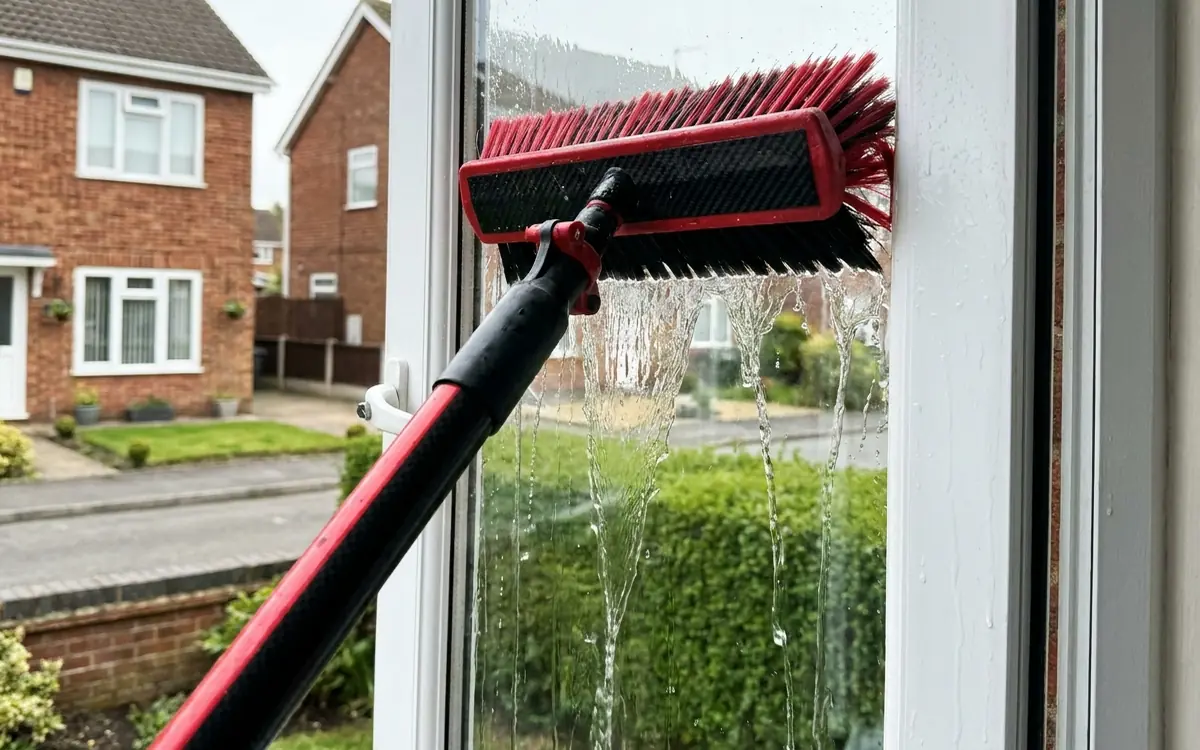
Dissolve it, don't scrub it. Salt film comes off with plenty of clean water, ideally purified, and a soft brush or cloth. Rinse thoroughly so no salty water dries back on the glass. Avoid dry wiping, which drags salt crystals across the glass. Coastal homes usually need the outside done more often than inland.
Why does salt build up on coastal windows?
Wind carries tiny droplets of sea spray inland. When they land on glass and dry, the water evaporates and the salt is left behind as a thin, cloudy film. Essex has a long coastline, from the Thames Estuary to the Stour, so homes in places like Southend, Canvey Island, Burnham-on-Crouch, Mersea and Clacton all get it.
The closer you are to the water, and the more your windows face the wind off the sea, the faster it builds up.
Why doesn't rain wash it off?
Partly it does, but not cleanly. Rain on a salty window dissolves some of the salt, then runs down and dries, often leaving streaks and dots. Windows under eaves or on sheltered sides barely get rained on at all. The result is a dull haze that comes back after every windy spell.
What's the best way to clean salt off glass?
Lots of clean water and a soft brush or cloth. Salt dissolves in water, so the job is to get enough clean water on the glass to carry it all away, then make sure what dries on the glass is clean.
- Rinse the glass first to dissolve the surface salt.
- Wash with a soft brush or cloth, working top to bottom.
- Rinse again with plenty of clean water.
- Squeegee dry, or use pure water so it can dry on its own.
Why is purified water good for salty glass?
It dries without leaving anything behind. Tap water has minerals in it, and on the coast you're often trying to clean one deposit without leaving another. Purified water has had those minerals removed, so it dissolves the salt and dries clear with no spots, no soap and no streaks.
Should you dry wipe salty windows?
No. Salt crystals are small and hard. Wiping them across a dry window can leave fine scratches over time, especially on frames and softer coatings. Always wet the glass first.
What about frames, rails and solar panels?
They get salt too, and benefit from the same rinse. uPVC frames, aluminium frames, balcony glass and stainless rails all collect salt film. On aluminium and metal rails, left too long, salt can encourage corrosion, so rinsing them regularly helps.
Solar panels near the sea also get a salt film, and on a shallow roof it doesn't rinse off well in the rain. Our solar panel cleaning uses pure water and soft brushes.
How often do seaside windows need cleaning?
More often than inland. Homes on the seafront may want the outside done more often, especially after stormy spells. A few streets back, the build-up is slower. Many coastal owners have the outside done more often than the inside.
Can someone do it for you?
Yes. We clean salty glass with pure water and soft brushes from the ground. See our pages for Southend, Canvey Island, Burnham-on-Crouch and Clacton-on-Sea, or ask for a free quote.