
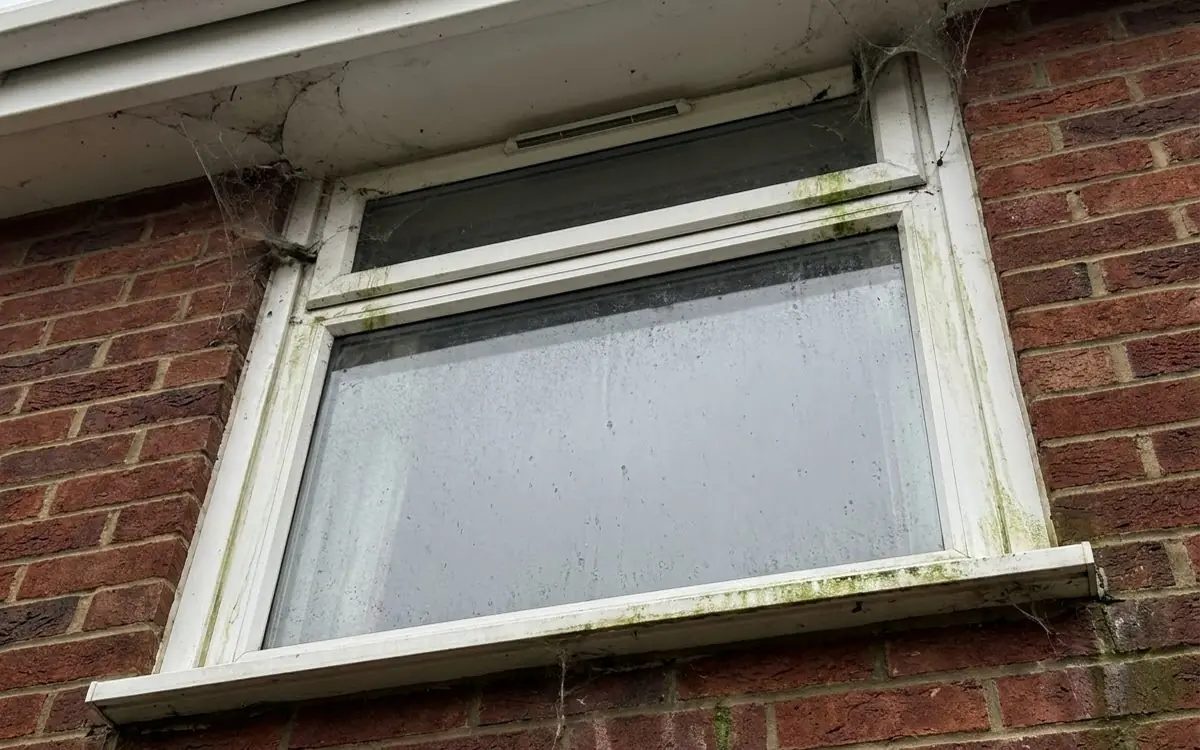
Flood the glass with water first to float off the loose grit, then soften each mortar or cement spot with water and lift it gently. Never wipe dry builders' dust across glass. On ordinary glass a wet, new blade pushed forward can lift hard spots; on toughened glass, soak and work them off instead.
Why is builders' dust so bad for glass?
Because it's grit. Plaster dust, brick dust and sand are hard particles. Wipe them across a window with a dry cloth and you're rubbing sandpaper over the glass. Fine scratches from a bad first clean are one of the most common ways new windows get marked.
The fix is simple: lots of water first. Wet the glass thoroughly so the grit floats and runs off before anything touches it.
What's the right order to clean new windows?
Rinse, soften, lift, then clean. Doing it in that order keeps grit away from the glass when you're applying pressure.
- Rinse the whole window with plenty of water to wash off loose dust.
- Soften each mortar or cement spot by keeping it wet for a few minutes.
- Lift the softened spots one at a time.
- Clean the glass properly once the grit is gone.
- Do the frames and sills last, as they collect what's washed down.
How do you lift hardened mortar spots?
Soak them and be patient. Mortar and cement are alkaline and bond to the glass as they cure. A spot that's been soaked for a while can often be lifted with a fingernail through a wet cloth or a non-scratch pad. On ordinary float glass, a brand-new blade, held low and pushed forward only on wet glass, will lift stubborn spots.
On toughened glass, which most new doors, low windows and patio doors are, skip the blade. Keep soaking and working the spot gently.
Should you use a cement remover?
Only with care. Some products for removing cement are acid-based and can damage uPVC, aluminium, rubber seals and the brick or stone around the window. Some can mark glass coatings. If you use one, choose one that says it's safe for glass and frames, test it, keep it off everything else and rinse very thoroughly.
In many cases, water and patience do the job without the risk.
What about the protective film on the frames?
Take it off as soon as the building work is done. The film is there to protect the frames during installation, but sunlight bakes it onto the uPVC over time, and then it tears into strips and leaves glue behind. Our guide on removing protective film from uPVC windows covers that in detail.
What about silicone smears and stickers?
Silicone smears are best rolled off with a fingernail through a cloth once the glass is wet. Labels and stickers lift more easily after soaking. Sticky residue comes off with a little washing-up liquid; avoid strong solvents near the seals.
When is the right time to clean?
After the dusty trades have finished and the scaffold is down. If you clean while plasterers or bricklayers are still working nearby, it'll be dusty again the next day. Book the clean for after the last messy job, and before you move furniture in if it's a new build.
When should you get help?
When there's a lot of glass, when it's high up, or when the marks don't shift with water. Our after-builders and new-build window cleaning covers glass, frames, sills and tracks across Essex, with plenty of pure water and no dry wiping.