
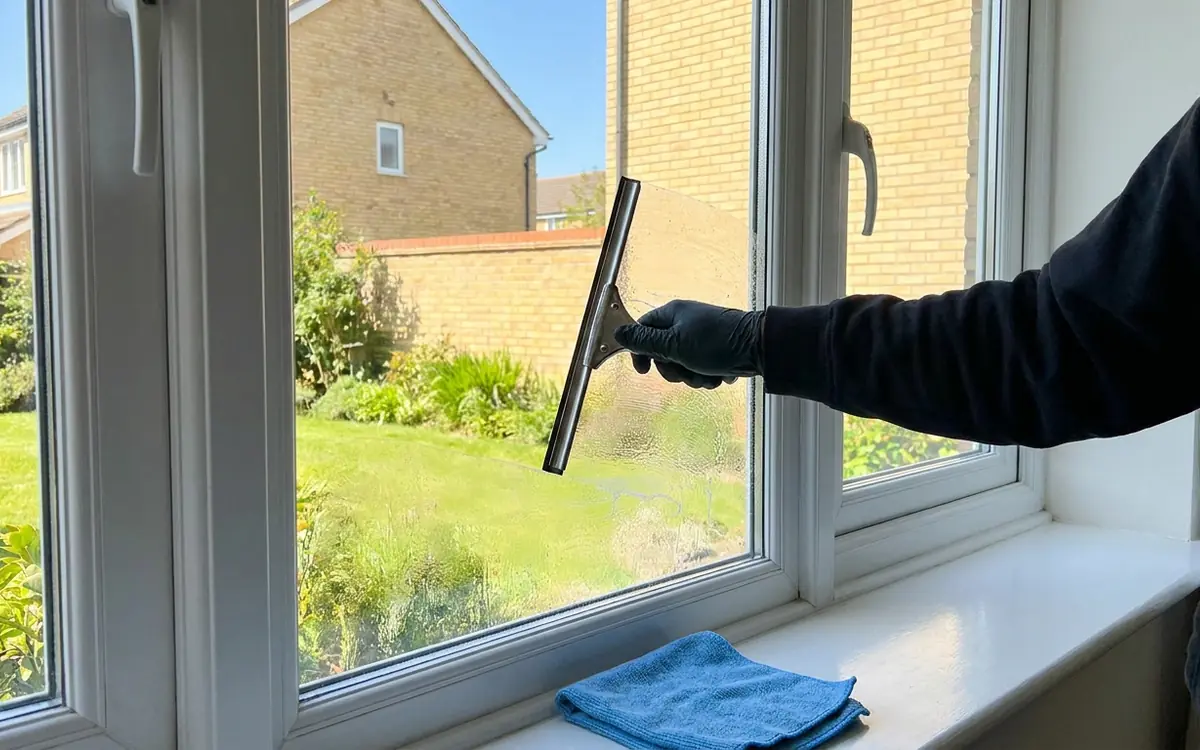
They can. If the check-in inventory shows the windows were clean, the landlord or agent may expect them clean at check-out, and cleaning is a common reason for deductions. Clean inside glass, frames, sills and tracks before the check-out inspection, and keep photos. Normal wear and tear shouldn't be charged for.
What does the landlord compare the windows against?
The check-in inventory. Most tenancies have an inventory or check-in report, often with photos, describing the condition of the property when you moved in. At check-out, the property is compared with that report. If it says the windows were clean and they're now grimy, that difference is what a deduction would be based on.
Find your copy of the inventory before you start cleaning, so you know what standard you're aiming for.
Which parts of the windows get checked?
Usually the inside glass, frames, sills and tracks. Check-out clerks tend to look for:
- Smears, fingerprints and condensation marks on the inside glass
- Black mould in the corners of frames and on rubber seals
- Dust and dead insects on sills
- Grit and debris in sliding door and window tracks
- Marks on the frames themselves, including tape or sticky residue
Outside glass is checked too, where the inventory covers it and where it can be reached safely.
What counts as fair wear and tear?
Normal deterioration from everyday living. A landlord shouldn't charge for things like ageing of seals or slight fading. Dirt that a clean would remove isn't usually treated as wear and tear, which is why cleaning is a common reason for deductions.
If you're in England and your deposit is in a government-backed protection scheme, there's a free dispute service if you disagree with a deduction. Evidence, especially photos, matters a lot in a dispute.
How do you deal with black mould on frames and seals?
Gently, with a cleaner that's safe for uPVC and rubber. Condensation in bedrooms and bathrooms often leaves black spots in the frame corners and on seals. A mild mould cleaner suitable for uPVC, applied with a soft brush and wiped off, usually shifts surface spots. Mould that has gone deep into a seal may not come out completely, which is worth noting on the check-out.
How do you clean window tracks?
Vacuum first, then wipe. Tracks on sliding doors and windows fill with grit, dead insects and leaves. Vacuum out the loose debris, then use a damp cloth or an old toothbrush in the corners. Clear the drainage slots so water can escape.
When should the windows be cleaned?
As close to the check-out as you can, after the furniture is out. Moving furniture kicks up dust and leaves fingerprints, so a clean done before the move often needs redoing. Book it for the day before or the morning of the inspection if you can.
Should you keep photos?
Yes. Take clear, dated photos of the windows, sills and tracks once they're clean, along with the rest of the property. If a deduction is disputed later, your photos and the check-in inventory are what count.
Can someone else do it for you?
Yes. Our moving-in and end-of-tenancy window clean covers inside glass, frames, sills and tracks, and the outside where it can be reached safely, booked around your check-out date. We can work from a key or key safe if you've already moved. See what an end-of-tenancy window clean covers for the full list.